Society accounts made simple: income, expenses and audit-ready reports
HousingMS Team · 27 Sept 2026 · 2 min read
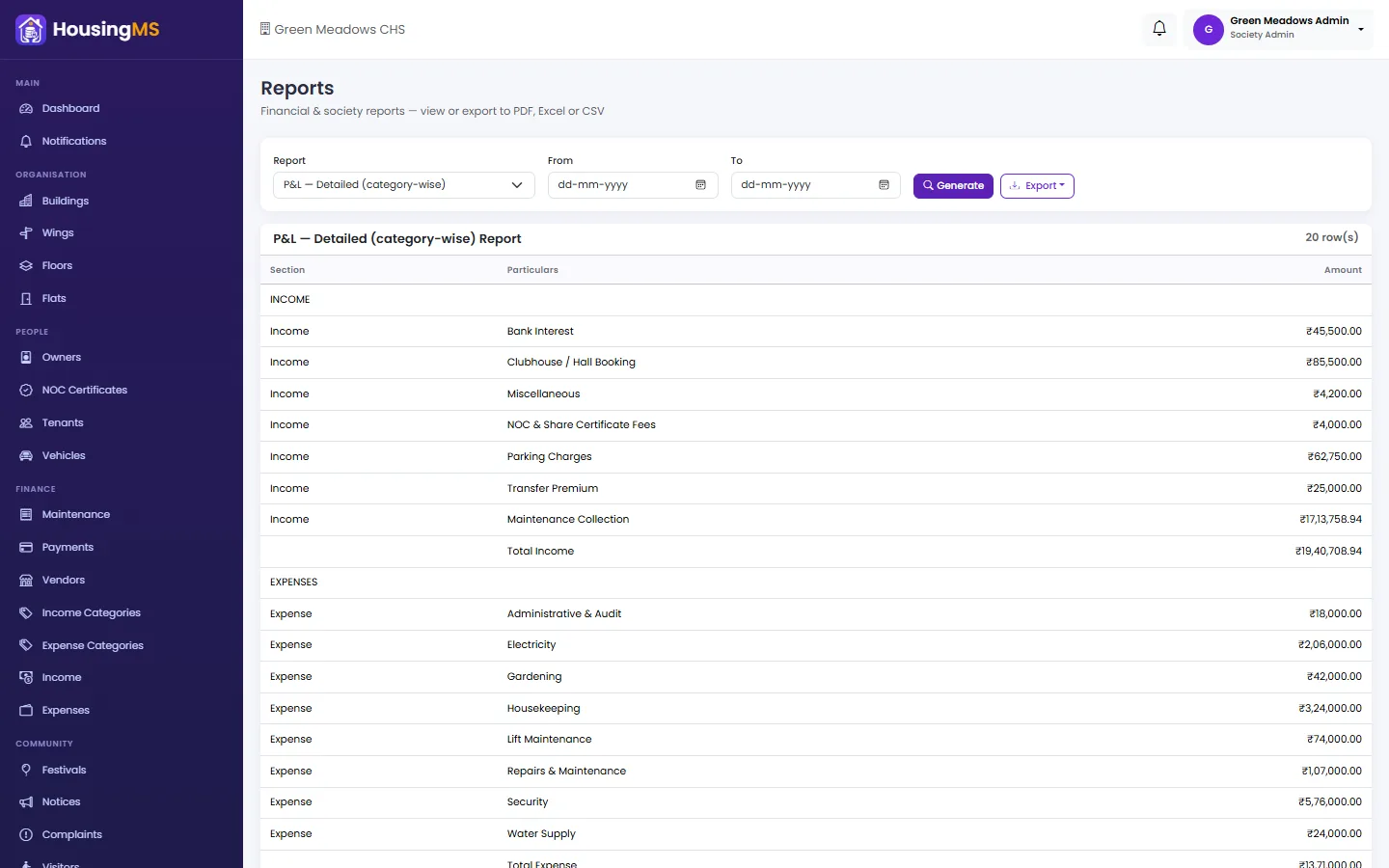
Most housing society treasurers are volunteers, not accountants. Yet at the end of the year they must hand the auditor a clean set of books. The good news: if the day-to-day is done right, the year-end almost writes itself.
1. Record income by category
Maintenance is the biggest source of income, but not the only one. Track each separately:
- Maintenance collections
- Interest on late payments
- Hall or clubhouse bookings
- Parking and non-occupancy charges
- Bank interest and fines
Categories make the income & expenditure statement meaningful instead of one big number.
2. Approve expenses before you book them
Every rupee spent should be approved by the committee before it is paid. An approval step — even a simple one — protects the treasurer, prevents disputes at the AGM and leaves a trail for the auditor. Keep vendor details and bills attached to each expense.
3. Reconcile with the bank every month
The bank statement is the source of truth. Once a month, match every credit and debit against your books. Importing the statement instead of retyping it saves hours and avoids typing mistakes.
4. Keep a ledger for every member
Each flat should have a running statement — bills, penalties, payments and the balance. It answers "how much do I owe?" without a phone call, and it is the first thing an auditor checks for defaulters.
5. The reports your auditor will ask for
- Income & expenditure (profit & loss)
- Balance sheet
- Member ledger and maintenance collection
- Lists of members, tenants and vehicles
Doing it in HousingMS
In HousingMS society accounting, maintenance payments are posted to the books automatically, expenses wait for committee approval, bank statements can be imported, and reports — income, expense, P&L, balance sheet, member ledger, collection — are ready to export whenever the committee or auditor needs them. Every entry records who made it and when.